I used to think I had a discipline problem. Turns out I had a sticky note problem. Before I started working from my kitchen table full time, I never noticed how many little scraps of paper piled up around my keyboard: a phone number here, a half-finished task list there, three different reminders to call the same client back. Somewhere in that mess, I stopped trusting my own system, and when you stop trusting your system, your brain starts trying to hold everything itself. That's exhausting, and it's the real reason so many of us feel scattered by 10am.
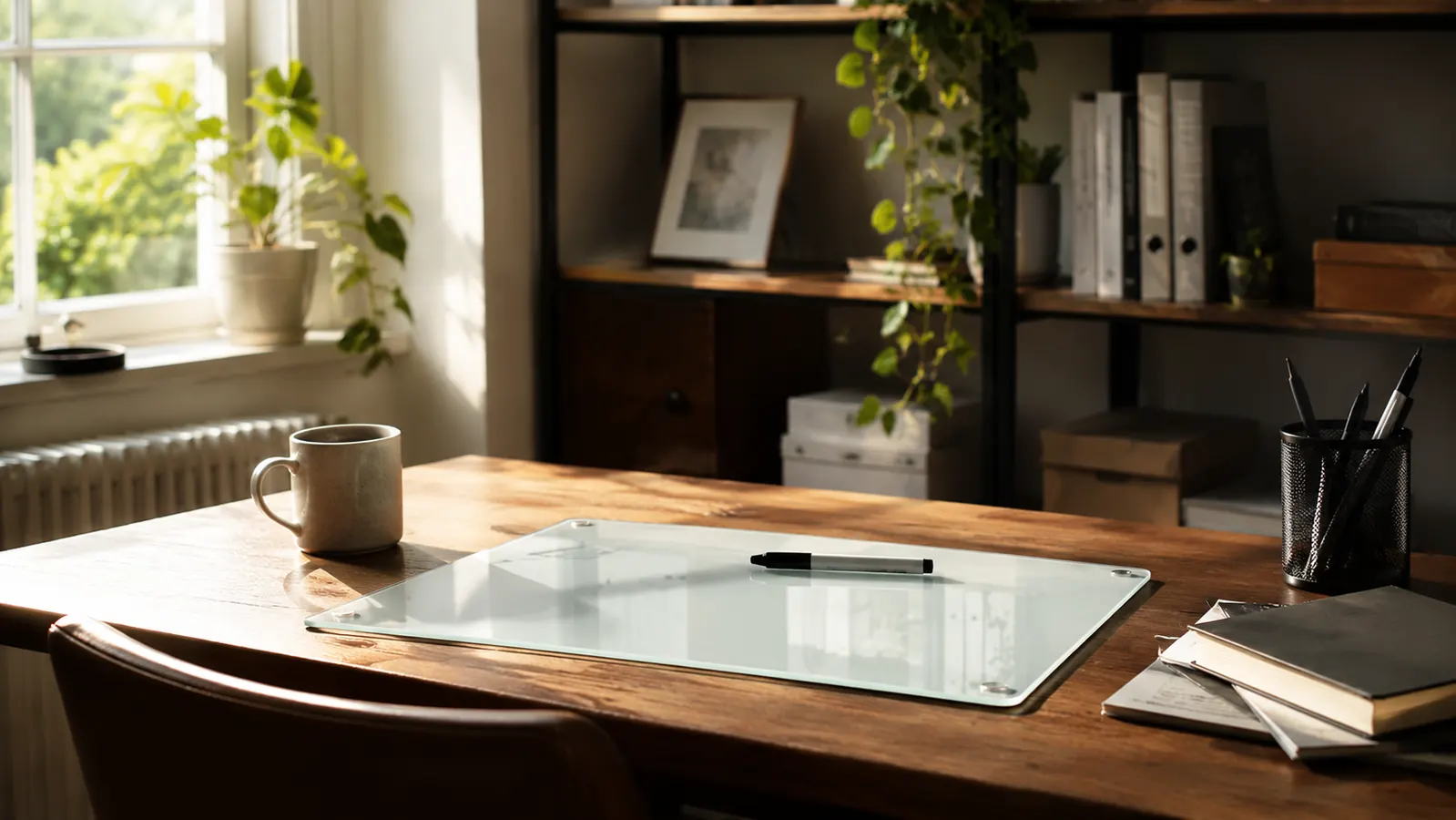
The fix, for me, ended up being almost embarrassingly simple. I bought the Quartet Glass Dry Erase Whiteboard, the 18 by 6 inch one that just sits flat on the desk like a placemat, and it changed how my whole morning goes. It's not a productivity app. It doesn't sync to anything. It just sits there in glass, waiting for me to write on it, and that's exactly why it works. Here are the ten reasons it's made the biggest difference in how well I focus.
The Desk Tool That Doesn't Need an App
If sticky notes and half-open tabs are eating your focus, a flat glass whiteboard gives your brain one place to look. See the current price and details on Amazon.
Amazon Check Today's Price on Amazon →It forces you to write down only what matters
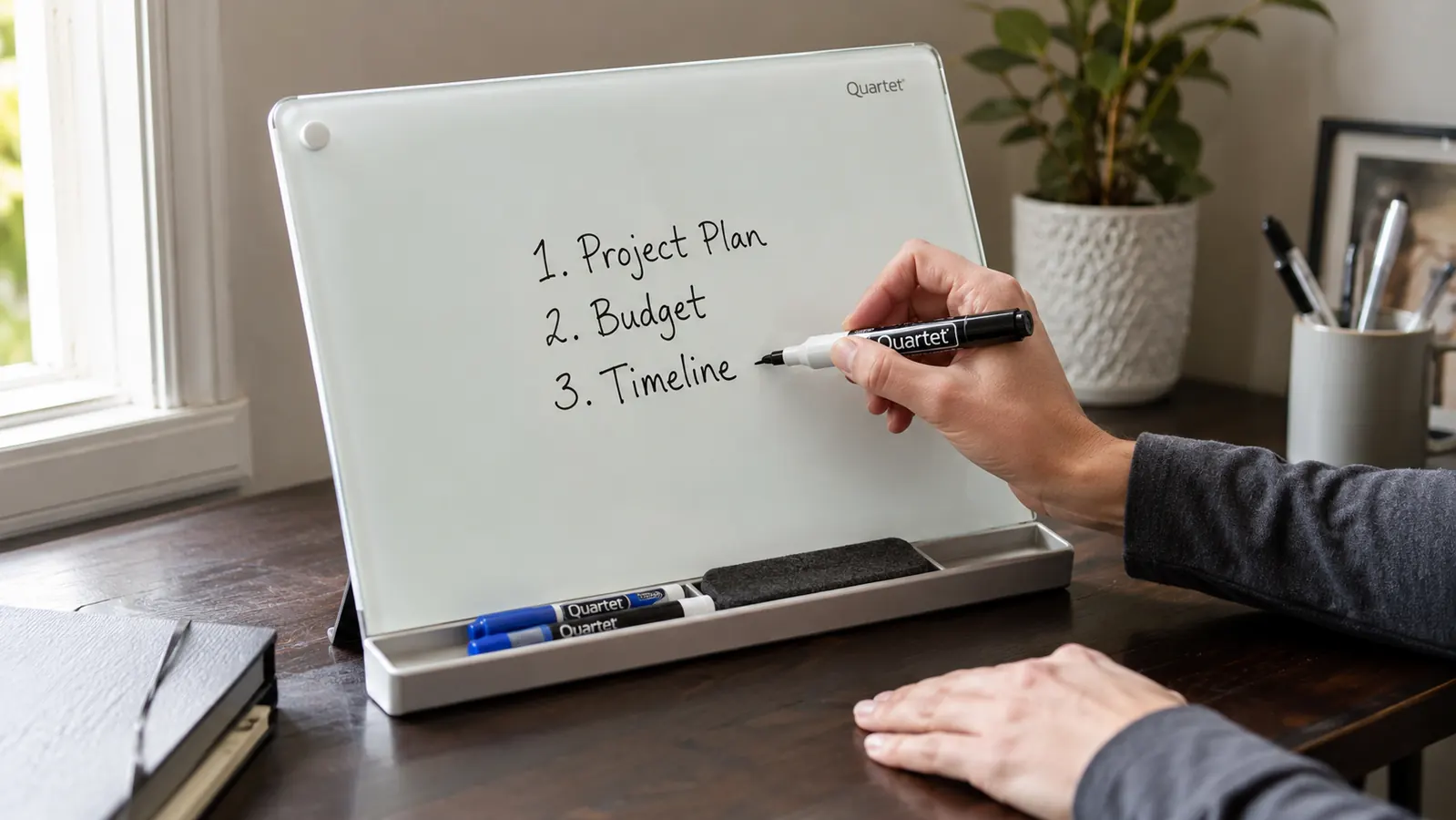
A sticky note pad lets you write as much as you want, so you end up writing everything. An 18 by 6 inch glass whiteboard has limited space, and that limit is the whole point. When I sit down in the morning with the Quartet board in front of me, I physically cannot cram in fifteen tasks. I end up writing my top three, maybe four if it's a heavy day, and that constraint alone cuts my mental noise in half.
One glance replaces ten mental check-ins
Before, I'd catch myself pausing mid-task to mentally re-run my whole to-do list, which is its own kind of distraction. Now I just glance down at the whiteboard. It sits flat, right under my monitor, so it's in my direct line of sight without me tilting my head. That one glance does the job that used to take me thirty seconds of staring at the ceiling trying to remember what else I was supposed to be doing. That saved thirty seconds adds up more than it sounds like, especially on the days I've got back to back calls and no room to lose focus mid-morning.
Erasing a task feels like actual progress
There's something satisfying about physically wiping a line off the glass surface that a checkmark in an app never gave me. The Quartet board erases clean with almost no ghosting, even after I've used the same spot for weeks. Watching the board get emptier through the day gives me a small hit of momentum that keeps me moving toward the next thing instead of drifting off to check email.
It keeps you off your phone for quick notes
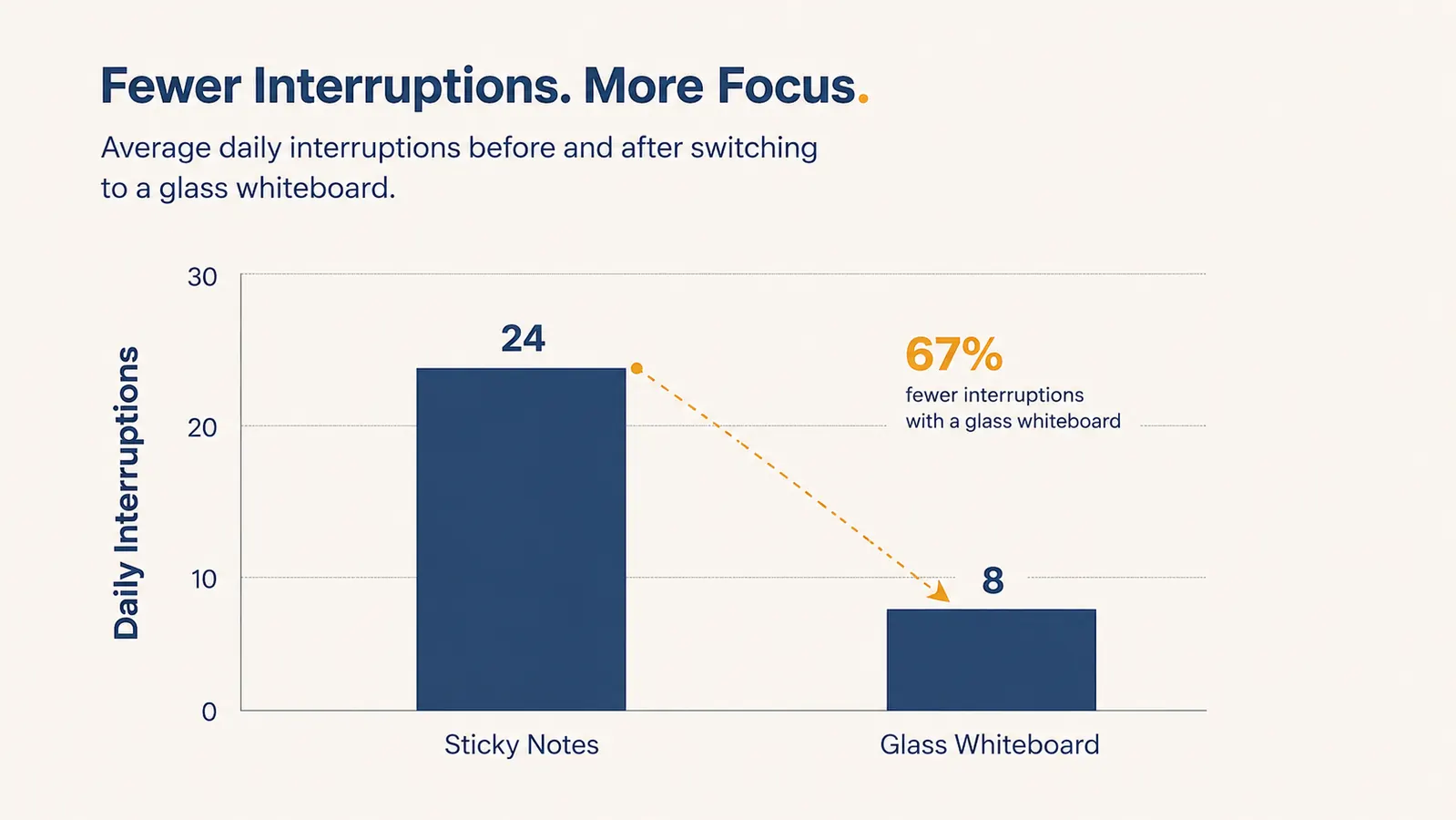
My old habit was to open the notes app on my phone every time I thought of something I needed to remember, and that trip almost always ended with me scrolling something else for five minutes. Now I grab the marker that sits right in the whiteboard's built in storage tray and jot it down in three seconds. No screen, no notifications waiting to ambush me, no rabbit hole. I didn't expect a five dollar habit change to matter this much, but cutting even three or four of those phone check-ins out of my morning has made my whole day feel less fragmented.
The glass surface doesn't leave ghosting like cheap boards do
I've owned melamine whiteboards before that started showing faint shadows of old writing within a month. That ghosting is distracting in its own quiet way, because your eye keeps catching old, half-erased words while you're trying to read today's list. The glass surface on the Quartet board wipes completely clean every time, so what I'm looking at is always current, never cluttered with the ghost of last Tuesday's plan.
It sits flat, so it doesn't compete for desk space
A lot of desktop organizers end up being one more thing you have to work around. This board is basically the size of a large placemat and it lies flat on the desk instead of standing up like an easel board. It doesn't block my monitor, it doesn't wobble when I bump the desk, and it doesn't add visual clutter the way an upright board would in a small home office. On a small desk, that matters more than people expect. I've got a laptop, a mug, and a stack of folders on mine, and the Quartet board still fits without me having to rearrange anything.
It gives your brain a dedicated spot for the day's priorities
Part of what makes focus so hard when you work from home is that everything competes for the same visual space, tasks, personal reminders, random ideas, all jammed into one notes app or one messy notepad. Having a single physical surface that's only for today's priorities trains your brain to treat that space differently. When I write something on the Quartet whiteboard, I know it's a today task, not a someday task, and that clarity alone cuts down on decision fatigue.

It's small enough to travel with your setup
I move between my home office and my sister's dining table on weeks I'm helping watch her kids, and this board comes with me easily. At 18 by 6 inches it slides into a laptop bag without much trouble. Whatever desk I land at, having the same whiteboard in front of me makes the workspace feel familiar fast, which matters more for focus than people expect.
The built in marker storage means you'll actually use it
Every organizing tool I've ever abandoned had one thing in common: the supplies wandered off within a week. This board has a narrow tray along the bottom edge that holds the marker and eraser right there, attached to the board itself. I'm not digging through a drawer for a dry erase marker that's dried out anyway. That tiny detail is the difference between a habit that sticks and one that quietly dies. It sounds like a small thing until you're the person who's bought three organizing tools this year that are all now buried in a drawer somewhere, unused.
It removes the temptation to overplan
Digital task tools make it too easy to build an elaborate system with tags, colors, and nested subtasks, and building that system becomes its own form of procrastination. A glass whiteboard this size won't let you do that. You write today's three things, you work on today's three things, and you erase them tonight. The simplicity is the feature, not a limitation.
What I'd Skip
I won't pretend this board fixes everything. If your job genuinely requires tracking twenty moving pieces at once, a small glass board isn't going to replace a real project management tool, and trying to force it to will just leave you squinting at tiny handwriting. It's also not something you mount on a wall for a team to see from across the room. This is a personal, at-the-desk tool, not a shared one. If you need color coding for six different projects, you'll outgrow the space fast. I still keep a separate running list in a notes app for longer term projects. The whiteboard's job is narrower than that, and it does that one job well.
The board didn't add a system to my day. It removed everything that wasn't the system.
Give Your Desk One Simple Focus Point
The Quartet Glass Desktop Whiteboard costs less than a dinner out and it's still sitting on my desk every single morning. See today's price and current availability on Amazon.
Amazon Check Today's Price on Amazon →