
By the time I finally admitted my home office had a paper problem, I had four different piles going at once: one on my desk I called this week, one in a grocery bag by the printer I called later, one in a manila folder labeled nothing at all, and one loose on top of a cabinet I already owned but rarely opened. Bills, insurance notices, my husband's pay stubs, medical statements I hadn't looked at in weeks. None of it got thrown away, because I was scared of tossing the wrong thing, so it just kept growing.
The moment it finally clicked was when the county sent a property tax appeal deadline, and I needed old assessment paperwork I knew existed somewhere in that mess. I spent two hours on a Saturday morning digging through loose paper before I found it, folded in quarters between two unrelated bank statements. That was the last straw. That week I bought a DEVAISE rolling file cabinet, and it is the whole reason the paper problem is finally behind me.
If any of that sounds familiar, the fix isn't more willpower or a weekend of shredding, at least not in my experience. It's having somewhere for the paper to actually go, close enough to your desk that using it takes less effort than not using it. That's what changed things for me: a small DEVAISE rolling file cabinet that sits right under my desk instead of a bin two rooms away. Here's exactly how I set mine up and how I've kept it from filling back up, step by step. For me, that somewhere turned out to be a DEVAISE rolling file cabinet parked right next to my chair.
Stop letting paperwork pile up where you can see it
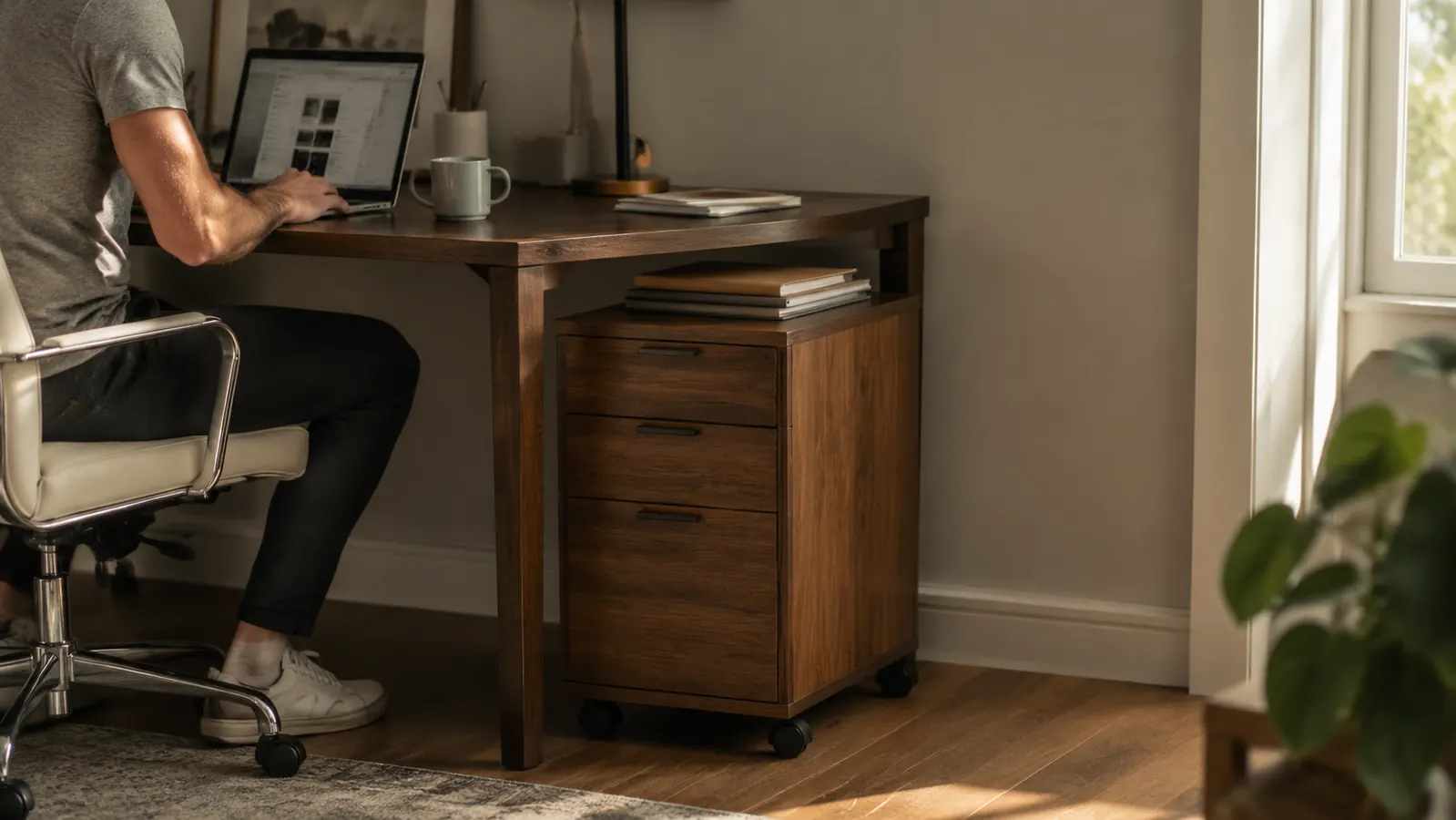
The DEVAISE 3-Drawer Rolling File Cabinet is the one I ended up keeping. It's real wood, not a flimsy plastic tote, it rolls on locking wheels so it tucks under the desk out of sight, and the top drawer holds full hanging folders for whatever paper is actually active right now.
Amazon Check Today's Price on Amazon →Step 1: Sort before you file anything
The mistake I made the first time was buying a filing cabinet and dumping every loose paper straight into it, unsorted, the same way I'd been dumping it into totes for two years. A cabinet with drawers doesn't fix a paper problem by itself. It just gives the mess three new places to hide instead of one.
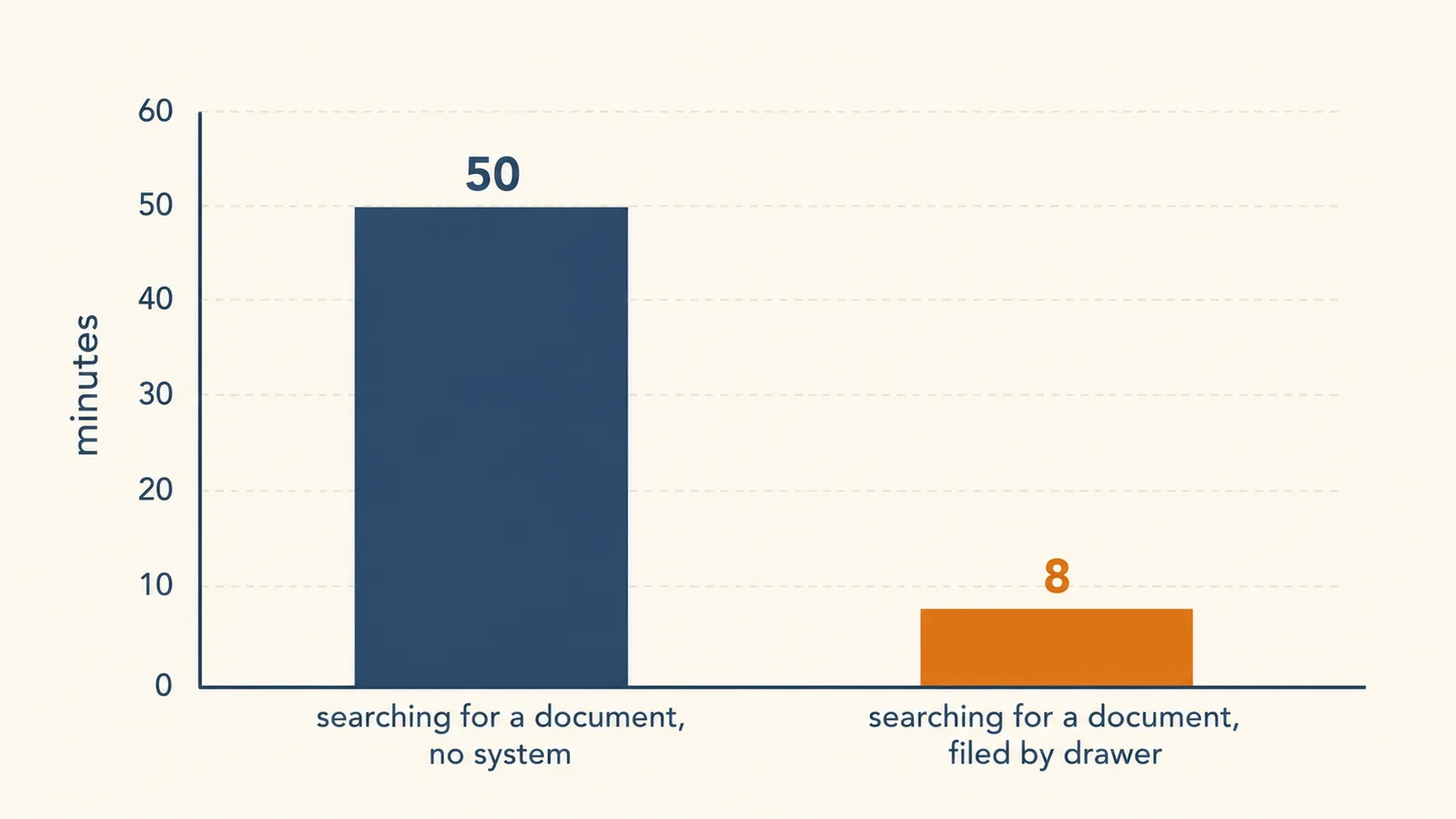
Before anything goes into a drawer, sort it into four rough piles right on the floor or the desk. Keep long-term: tax returns, deeds, warranties, anything with account numbers you'd need someday. Keep short-term: this month's bills, anything you're actively working through. Shred: old statements with personal information you no longer need. Recycle: junk mail, expired coupons, anything with nothing personal on it. It took me about ninety minutes to sort through four totes worth of backlog. Not fun, but a one-time cost.
Don't skip the shred pile. It's usually the biggest one, and it's the reason so many of us end up keeping paper we don't need, because getting rid of it feels like more effort than just leaving it where it is. I found statements going back nine years in my old totes. None of it needed to exist anymore, and shredding it freed up more space than anything I actually kept.
Step 2: Pick a cabinet that actually fits your space and your paper
Once I knew how much I was actually keeping, I could pick a cabinet sized for reality instead of guessing. I looked at a couple of plastic rolling carts first. They were fine for holding stuff, but neither one held real hanging file folders, the kind with metal rails that let a folder hang upright instead of slumping over on itself.
I ended up with the DEVAISE 3-Drawer File Cabinet, mostly because it's built from actual wood instead of thin plastic, it's narrow enough to roll under the side of my desk, and the top drawer is deep enough for full-size hanging folders. The wheels lock, which matters more than I expected going in, because an unlocked rolling cabinet that scoots away every time you tug a drawer open gets old fast.
It's worth measuring your desk's clearance before you buy anything. Mine has about 15 inches of open space along the right side, and the DEVAISE cabinet fits with roughly an inch to spare. If your clearance is tighter than that, measure twice. A file cabinet that doesn't fit under the desk just becomes one more thing sitting in the middle of the room.
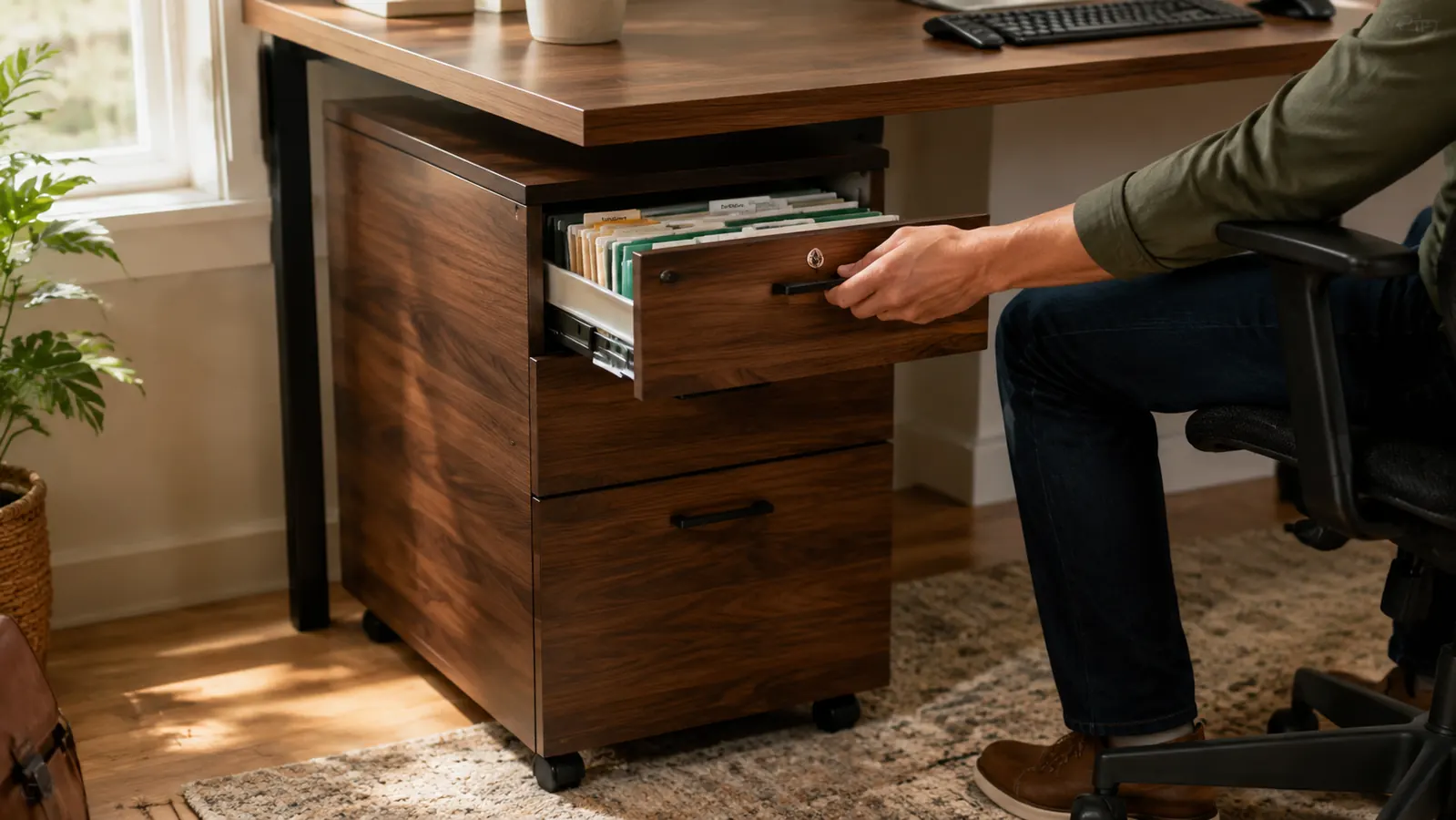
It's also worth checking how the drawers themselves move before you commit to a system. The DEVAISE cabinet's drawers glide on metal rails rather than just sliding wood against wood, so even the bottom drawer, which holds the most weight in my setup, still opens smoothly with one hand. That's the exact thing that made me stop using my old cabinet, a bottom drawer that needed both hands and a hip check to budge.
One feature I didn't expect to use but genuinely do is the flat top surface. The DEVAISE cabinet is sturdy enough to double as a small printer stand, which is exactly how mine sits now, printer on top, drawers underneath. If your printer currently lives on the desk itself, moving it onto the cabinet frees up more usable desk space than the cabinet takes away.
Step 3: Set up drawers by how often you touch the paper, not by category
My first instinct was to organize by subject, one drawer for finances, one for medical, one for house paperwork. It technically worked, but I found myself opening all three drawers most days anyway, because whatever I needed that morning could be in any of them.
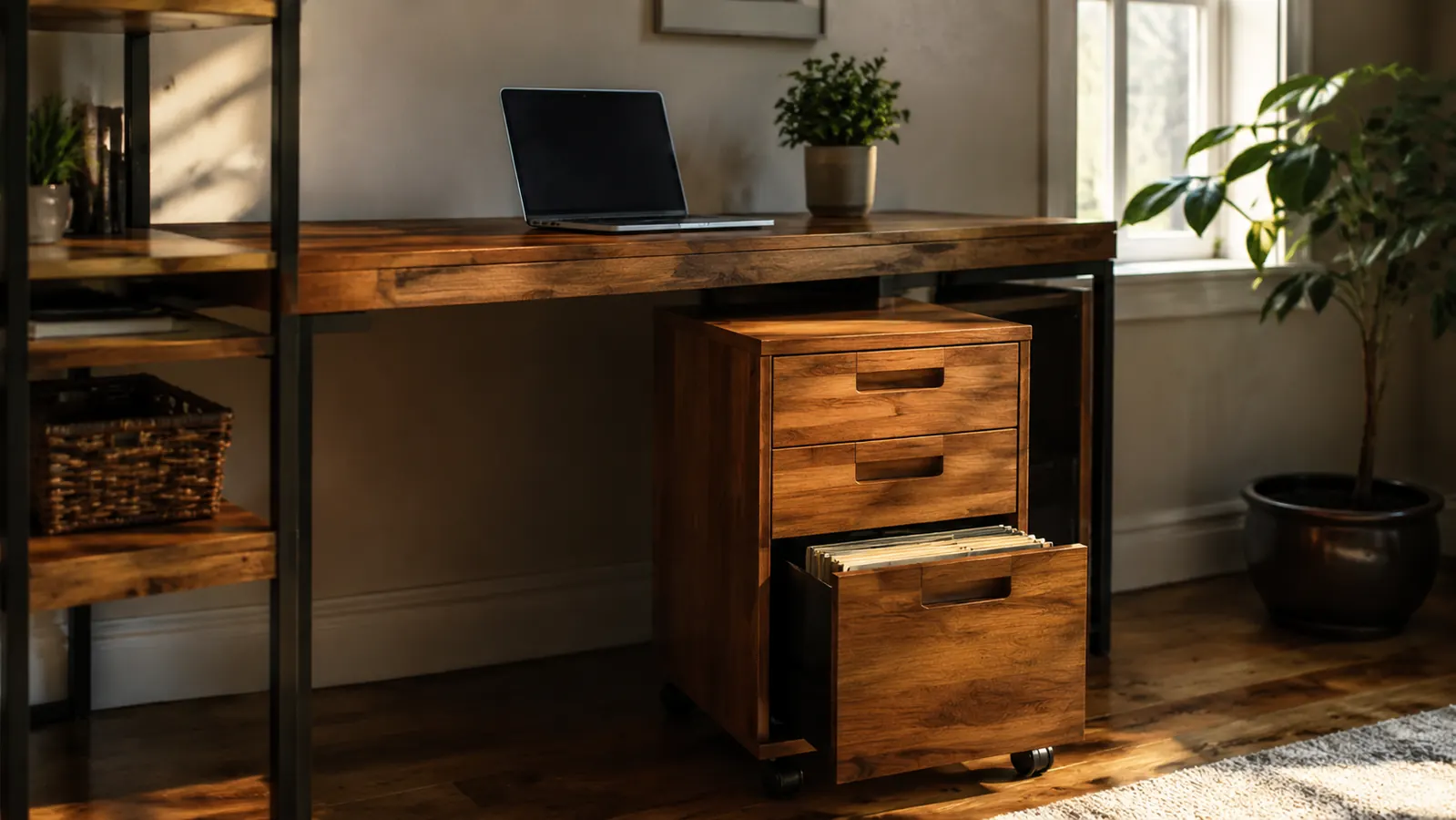
What worked better was organizing by how often I actually reach for something. The top drawer of the DEVAISE cabinet holds my active folders, the ones I open at least once a month: current bills, this year's receipts, anything mid-project. The middle drawer holds the long-term keepers I rarely touch but can't shred: tax returns, insurance policies, warranties, the house paperwork. The bottom drawer holds printer paper and a couple of reference binders, since it's a little harder to reach without bending down.
This matters more than it sounds like it should. The drawer you'll open constantly needs to be the one closest to your hand while you're sitting at the desk, which for most rolling cabinets is the top one. Put your least-used paper on the bottom, and the system actually keeps working instead of turning into another drawer you have to dig through every time.
Within each drawer, I use plain colored hanging folder tabs, one color per broad topic, so I can find the right folder by glancing instead of reading every tab. It's a small touch, but it cuts down the seconds it takes to find something, and seconds add up when you're doing it several times a week.
Step 4: Build a five-minute filing habit
A cabinet only helps if the paper actually makes it into the drawers, and that's the part that fell apart for me the first two times I tried to get organized. I'd file everything once, feel great about it for a week, and then let three weeks of mail pile back up on the desk because filing felt like a chore I'd get to later.
What actually stuck was keeping a small tray on top of the DEVAISE cabinet for anything that needs to be filed, and setting a reminder every Friday afternoon to empty it into the right drawer. Five minutes, once a week, is small enough that I don't skip it, and it's often enough that the tray never gets overwhelming in between.
If you live with other people, it helps to say out loud, once, that the tray is for filing and nothing else. I found sticky notes, a spare phone charger, and one time an actual sandwich sitting in mine before that rule was firmly established.
While I'm filing the physical copy, I've also started snapping a quick photo of anything genuinely irreplaceable, deeds, titles, passports, before it goes into the drawer. The cabinet protects the paper from clutter, but it won't protect it from a flood or a fire, so a backup on your phone or a cloud folder is worth the extra thirty seconds.
Step 5: Know what a file cabinet won't do for you
A rolling file cabinet organizes the paper you're keeping. It doesn't decide what you should keep, and it won't stop new paper from arriving in the mail every week. If you're not doing at least a light purge once or twice a year, pulling anything expired and shredding it, the drawers will eventually fill back up no matter how good your system is.
It's also worth knowing the size limits going in. The DEVAISE cabinet handles standard letter-size hanging folders comfortably. If you're dealing with a lot of legal-size documents, oversized certificates, or anything wider than a normal sheet of paper, measure the drawer depth against what you actually have before assuming it will all fit.
The wheels are another thing worth setting expectations on. They roll smoothly on hardwood or low-pile carpet, but on thick carpet the cabinet takes a little more push to move than you'd expect from something on wheels. It's not a dealbreaker, it just means don't plan on rolling it across the room daily. Mine mostly stays parked under the desk and only comes out a few inches when I need to reach the bottom drawer.
What Else Helps
A rolling file cabinet solves the storage half of the problem, but labeling solves the other half. Folders that all look the same from the outside are almost as bad as no system at all, so a simple label maker, or even neat handwritten tabs, makes a real difference once the drawers are set up. I also keep a small recycling bin right next to the cabinet, since a good chunk of what comes through the mail slot doesn't need to be filed anywhere. It just needs to go straight to recycling instead of landing on the desk in the first place.
One more thing that helped more than I expected: keeping a short list taped inside the top drawer of exactly what belongs where. It sounds unnecessary until six months go by and you can't remember whether you filed the car warranty under 'auto' or 'house.' A one-line reminder settles the argument with yourself in about two seconds.
The paper didn't stop coming once I got the DEVAISE cabinet. It just finally had somewhere to go instead of sitting on my desk making me feel behind.
Give your paperwork a drawer instead of a pile
If bills and statements keep colonizing your desk, the DEVAISE 3-Drawer Rolling File Cabinet gives them an actual home that rolls out of sight when you're not using it. It's the one I still use every week to keep the backlog from coming back.
Amazon Check Today's Price on Amazon →